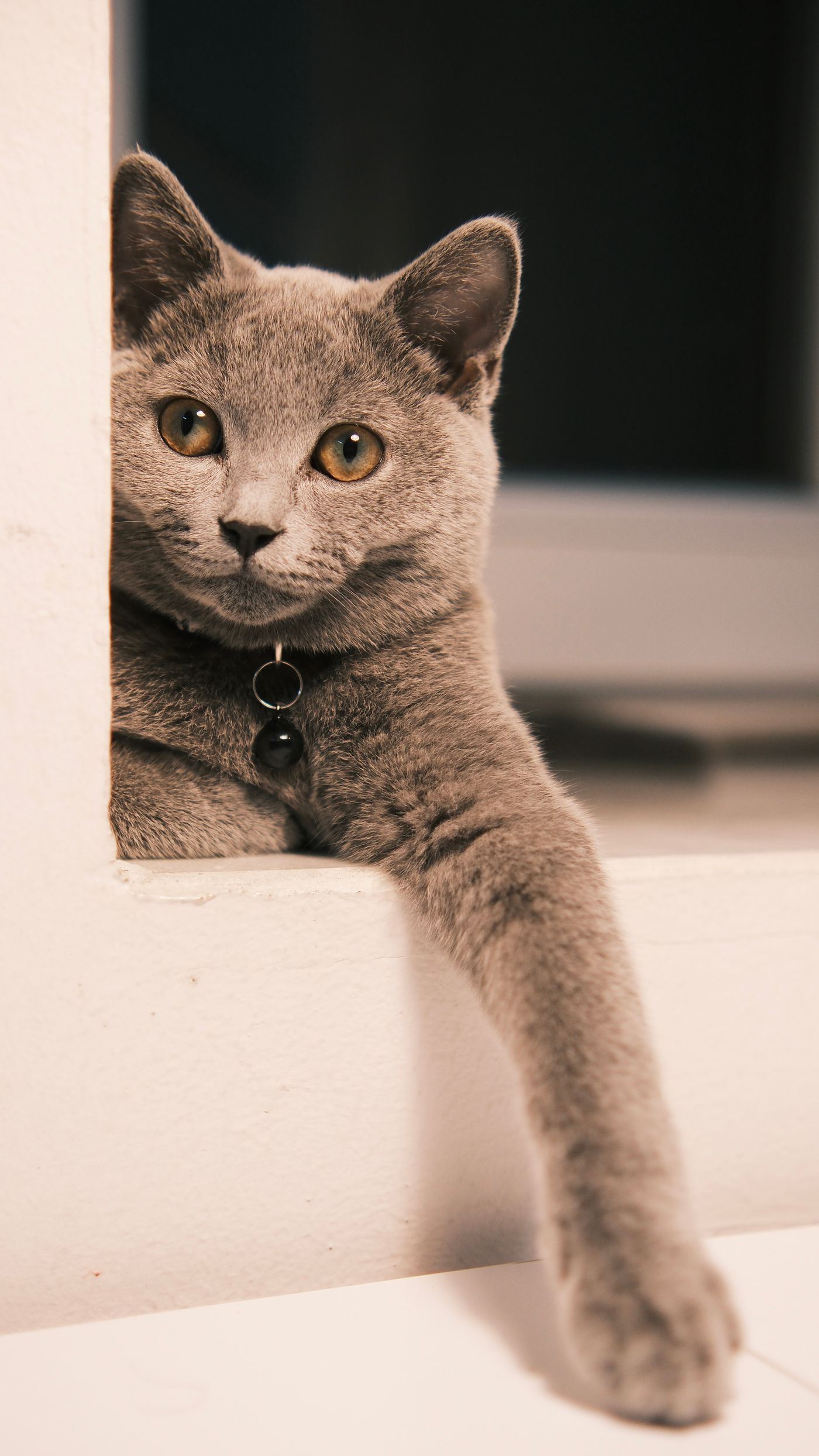
Are Russian Blues hypoallergenic?
The honest answer, not the marketing version.
The honest answer, not the marketing version.
Short answer: no cat is truly hypoallergenic, and that includes the Russian Blue. Longer, more useful answer: this breed has a long-standing reputation among owners and some breeders for producing less of the protein that triggers most cat allergies, and for shedding less overall. The evidence behind that reputation is real but thinner than people assume, so here is what is actually going on.
Most cat allergies are a reaction to Fel d 1, a protein cats produce in their saliva and skin glands, then spread through the coat when they groom. It is not the fur itself that triggers a reaction, it is this protein riding along on dander and saliva.
Owners and breeders have reported for decades that Russian Blues seem easier on allergy sufferers than many other breeds, and a dense, short double coat that sheds less than some longer-haired breeds likely plays a role. But compared to breeds like the Siberian, which has more independent research behind its lower Fel d 1 output, the data specific to Russian Blues is more anecdotal than proven. Treat the reputation as a reasonable starting point, not a settled fact.
Fel d 1 output varies cat to cat, even within the same litter. Intact males tend to produce more than neutered males or females. A Russian Blue can still trigger a reaction in a sensitive person, especially with heavy or prolonged exposure. Be wary of any breeder who guarantees a hypoallergenic kitten outright, that claim is a red flag, not a fact.
The bottom line
If you have mild to moderate cat allergies and love Russian Blues, it is worth a real test: spend time with an adult Russian Blue in person, ideally more than once, before committing to a kitten. If you have severe, medically diagnosed cat allergies, talk to your allergist first regardless of breed.
If you want to try
The best allergy test is real time with a real cat. See kittens from health-tested Russian Blue lines and start a conversation.
See Available Kittens